

Thank you for Subscribing to Cannabis Business Insights Weekly Brief


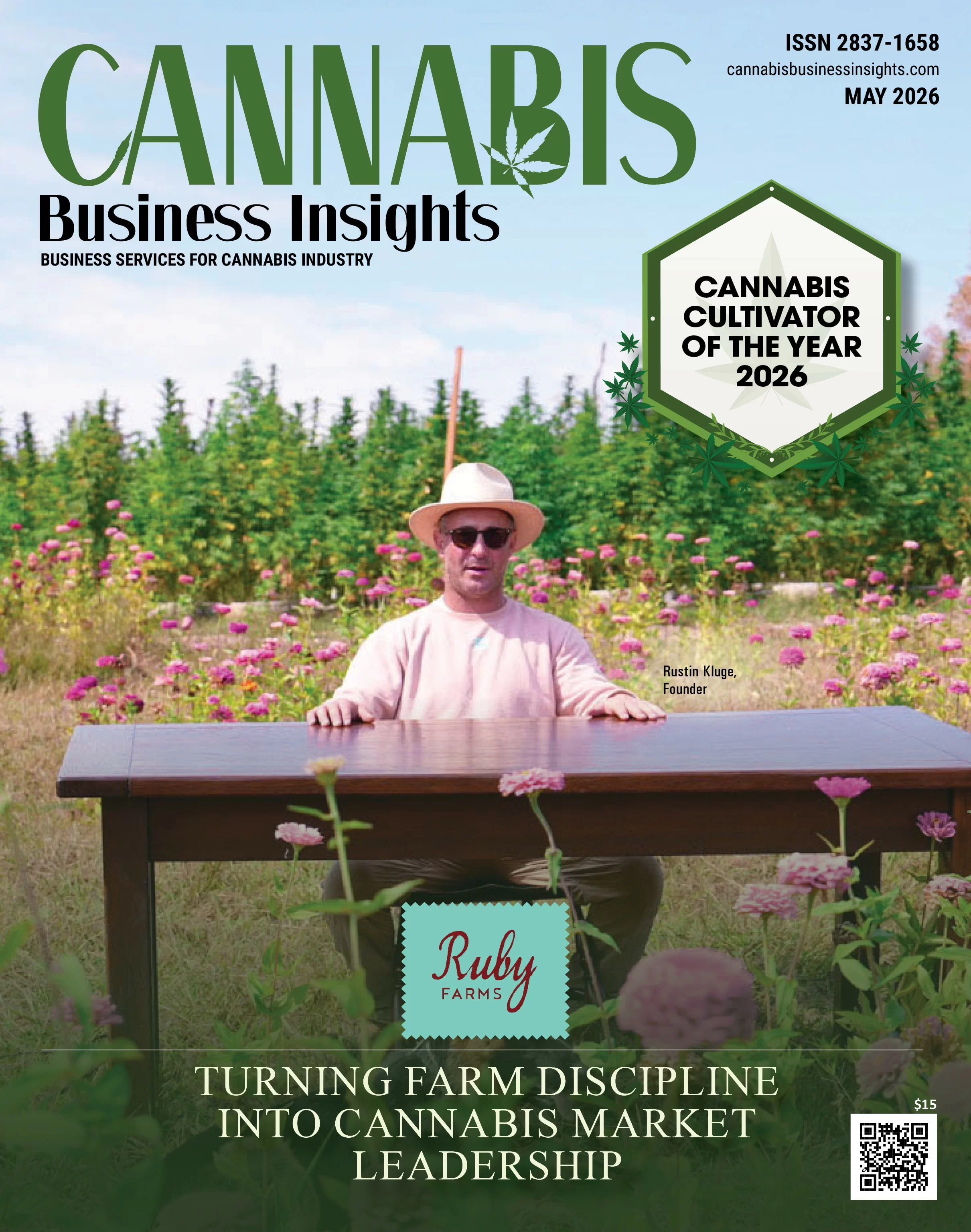
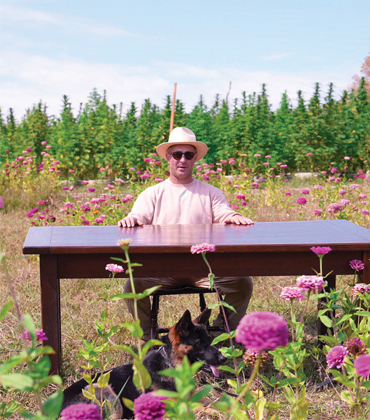 Rustin Kluge, Founder
Ruby Farms has emerged as one of New York’s leading cannabis cultivators. The company operates first and foremost as a working farm, integrating cannabis alongside other crops within a broader agricultural system. Currently, it distributes to hundreds of dispensaries across the state and ranks as New York’s number-one selling pre-roll brand.
Such an impressive market performance is rooted in an agricultural model built over more than a decade in the Hudson Valley. The farm produces roses, vegetables, and livestock alongside cannabis, generating the organic material that feeds Ruby Farms’ compost systems and regenerative soil program.
“For us, it’s quality in, quality out,” says Rustin Kluge, Founder. “The more we invest in the soil, the better the cannabis we harvest.”
Our mantra is to create great experiences and bring the best value to the consumer. Best product at a fair price.
It’s this long-cycle agricultural approach that places Ruby Farms among a small minority of outdoor cultivators capable of achieving indoor-level quality, a standard that only roughly two percent of sun-grown producers consistently reach.
Making Sun-Grown Cannabis Perform Like Indoor
How does Ruby Farms manage environmental variability to maintain quality in sun-grown cannabis production?
 Outdoor cultivation exposes plants to variables such as weather fluctuations, seasonal shifts and environmental exposure that indoor growers work hard to eliminate. Ruby Farms manages that variability through disciplined post-harvest engineering.
Drying takes place in fully climate-controlled facilities where temperature, humidity and airflow are carefully monitored. Managing these conditions is essential to preventing degradation while preserving terpene expression and the structural integrity of the flower.
But for Ruby Farms, harvest does not mark the end of cultivation. It marks the beginning of protecting it.
“You can have a great crop,” says Kluge. “But if you mess up the dry, you can ruin five months of work in five days.”
Curing, as a result, doesn’t mean passive aging. The team manages the process actively, handling each barrel repeatedly throughout the curing cycle to stabilize moisture levels and allow aroma and flavor profiles to develop fully.
Storage completes the chain. The finished product is maintained under tightly controlled conditions similar to those used for wine or spirits cellars, preserving freshness and consistency until it reaches dispensaries.
Together, this layered preservation system allows sun-grown cannabis to retain aroma, flavor and burn quality comparable to indoor cultivation while avoiding the energy intensity typical of indoor facilities. In a market as competitive as New York, that operational precision translates directly into product reliability and commercial performance.
Building a Genetic Library for Consistent Retail Performance
Why is genetic consistency important for ensuring reliable consumer experiences and retail performance outcomes?
 If disciplined post-harvest handling protects the quality created in the field, genetics determines the foundation of that quality long before a plant is harvested. Ruby Farms has cultivated hundreds of cannabis varieties while building a proprietary genetic library designed to deliver consistent consumer experiences at scale.
“It’s got to check all the boxes,” says Kluge.
Those “boxes” reflect the traits that ultimately shape how consumers experience the product, such as terpene richness, balanced potency, flavor expression and genetic reliability. High terpene levels define aroma and taste, while balanced cannabinoid combinations influence the overall experience associated with each strain.
The portfolio combines classic genetics with carefully selected exotic lineage, creating diversity across indica, sativa and hybrid categories. Some cultivars are designed to support focus and uplift, while others are bred to promote relaxation or rest.
That approach also reinforces consistency at the retail level. Stable genetics ensure dispensaries receive reliable product profiles from harvest to harvest, allowing retail partners to know what to expect and consumers to return to strains that deliver familiar aroma, flavor and effects without encountering unpredictable variations.
For Kluge, that reliability ultimately connects back to Ruby Farm’s broader philosophy of value and experience.
-
Ruby Farms has cultivated hundreds of cannabis varieties while building a proprietary genetic library designed to deliver consistent consumer experiences at scale.
“Our mantra is to create great experiences and bring the best value to the consumer,” he says. “Best product at a fair price.”
Winning in New York Without Owning the Storefront
To what extent does operational consistency influence distribution success in regulated cannabis retail markets?
New York’s regulatory framework separates cultivation from retail, creating a two-tier system similar to the spirits industry. Growers cannot operate dispensaries, which means success depends on earning trust across a network of independent retailers without controlling the storefront experience.
 Ruby Farms distributes its products to hundreds of dispensaries across the state, sustaining that reach through dependable supply and consistent product quality.
In this structure, cultivation performance alone is not enough. Operational reliability becomes just as important. Orders must arrive on schedule; packaging must protect product integrity through distribution and communication with dispensaries must remain clear and responsive.
Ruby Farms approaches those relationships with the same focus it applies to cultivation. It distributes only its own label and does not operate as a multi-brand wholesaler, allowing its brand representatives to focus entirely on communicating the farm’s cultivation philosophy and product standards.
The result is a direct connection between farm and retail shelf. Consumers remain only one step removed from the cultivation source, encountering products that reflect the practices and standards behind them. In a market built around independent dispensaries, that consistency helps maintain trust from cultivation through the retail shelf.
Packaging as Cultural Signal
Packaging often becomes the first signal of quality in the cannabis market, shaping how consumers interpret a product before they experience it. Ruby Farms approaches that signal using design choices that reflect the same agricultural discipline behind its cultivation model.
 Amber glass containers, wood cork closures and vintage-inspired aesthetics communicate craftsmanship, not just the commodity production. The visual language mirrors the character of the farm itself. One signature product features cannabis wrapped in rose petals, a detail that draws directly from the Hudson Valley fields where roses grow alongside cannabis and other crops cultivated on the property.
 The same carries into Ruby Farm’s edible portfolio. Unlike the candy-style formulations common in the category, Ruby Farms develops flavors such as mandarin rose, peach ginger cayenne, and elderberry sage. The goal is refinement over novelty, positioning cannabis as something that can integrate naturally into adult wellness and lifestyle routines.
That positioning attracts consumers who value flavor, balance and intentional consumption over high-intensity novelty. By emphasizing agricultural craft, restrained aesthetics and thoughtful flavor design, Ruby Farms distances its brand from the stereotypes that have historically defined cannabis marketing.
Culture as Operational Infrastructure
Behind Ruby Farms’ cultivation system stands a team structured around the same agricultural philosophy that guides the farm itself. Management treats culture as an operational foundation rather than a soft organizational concept, recognizing that consistent cultivation standards depend on the people responsible for executing them.
 Recruitment focuses on individuals who align with the farm’s land-based ethos and commitment to craft. Training programs emphasize professionalism, product knowledge and brand representation, while brand ambassadors are carefully selected to ensure they communicate the farm’s values accurately in the marketplace.
Leadership describes the internal culture as symbiotic. Employees develop long-term career pathways within the organization, and that continuity supports operational stability. When teams remain cohesive, quality control becomes easier to maintain, and cultivation practices are applied with greater consistency from season to season.
The farm’s broader initiatives further reinforce that culture. Activities such as honey production, maple syrup harvesting, woodworking, and farm-inspired apparel extend Ruby Farms’ identity beyond cannabis alone. Together, they reflect a philosophy rooted in stewardship of the land and respect for craft.
Within that framework, cannabis becomes part of a larger agricultural narrative. The same principles that guide the farm’s other products, like care for the land, disciplined production and respect for natural processes, also shape how Ruby Farms cultivates its cannabis.
Taking a Soil-Driven Cultivation System to Global Markets
Ruby Farms continues to deepen its presence across New York, a market leadership that it views as central to its long-term path. Partnerships with dispensaries across the state have gradually expanded the farm’s reach, allowing Hudson Valley–grown flower to move steadily from field to shelf while maintaining the cultivation standards that define the brand.
International expansion remains part of Ruby Farms’ longer-term outlook. Leadership approaches that step with the same patience applied to cultivation. New markets will follow only when the agricultural systems supporting the farm, soil maturity, genetic stability and post-harvest control, are ready to sustain the same level of consistency beyond New York.
A third-generation New Yorker, Kluge frames Ruby Farms not simply as a cannabis company but as an agricultural business built around life on the land. Its steady approach has translated into industry recognition.
Cannabis Business Insights recognizes Ruby Farms as Cultivator of the Year 2026, acknowledging a cannabis cultivation model in which long-term agricultural investment and disciplined execution continue to produce reliable results in one of the most competitive cannabis markets in the U.S.
Cultivator of the Year: The New Benchmark for Cannabis Cultivation Excellence
Executives responsible for sourcing cannabis cultivation partners operate in a market defined by scrutiny, volatility and rising consumer expectations. Mature legal markets such as New York have intensified pressure on cultivators to deliver consistent flower quality while maintaining economic viability. Buyers must navigate a crowded field where branding often eclipses agricultural discipline, making it increasingly difficult to identify producers capable of sustaining premium standards at scale. Cultivation leadership today rests less on marketing narratives and more on the depth of agronomic knowledge, genetic stewardship and post-harvest precision embedded within a grower’s operation.
The most dependable cultivators share a common foundation: a disciplined approach to soil health and ecosystem management. Cannabis remains an agricultural product first and foremost. When soil development is treated as a multi-year investment rather than a seasonal input strategy, plant health improves naturally through balanced nutrient cycles and microbial activity. Regenerative farming methods increasingly signal long-term seriousness because they demand patience and capital commitment before results emerge. Buyers evaluating cultivation partners benefit from examining whether the producer manages soil fertility through composting, organic inputs and continuous land stewardship rather than relying heavily on short-term chemical supplementation. Long-range soil development tends to translate into more stable crop performance and a more distinctive terpene expression in the final flower.
Genetic stewardship represents another distinguishing factor between ordinary cultivators and category leaders. Cannabis markets reward novelty yet punish inconsistency. Producers must therefore balance heritage cultivars that consumers recognize with ongoing breeding work that improves potency, flavor and plant resilience. Serious operators treat genetics as intellectual property developed over years of phenotyping and data collection. Maintaining libraries of proven cultivars while refining new variations allows a cultivator to supply dispensaries with reliable product profiles while introducing fresh options that keep retail shelves dynamic. Buyers often find that cultivators investing deeply in genetic research demonstrate stronger product stability across harvest cycles.
Post-harvest handling ultimately determines whether cultivation excellence reaches the consumer intact. Flower that is expertly grown can lose its value rapidly if drying, curing and storage conditions lack precision. Leading cultivators replicate the environmental control normally associated with indoor facilities even when the crop itself is sun grown. Climate-regulated drying rooms, controlled airflow and carefully monitored humidity levels preserve terpene integrity during the most vulnerable stage of production. Curing techniques also require ongoing manual oversight, often extending over several weeks to stabilize moisture content and enhance aromatic complexity. Storage practices deserve equal attention since cannabis, like wine or specialty agricultural goods, continues to evolve after harvest. Buyers evaluating potential partners often discover that post-harvest discipline separates growers capable of premium retail positioning from those producing commodity flower.
Market dynamics in regulated states reinforce the need for cultivation partners that combine agricultural credibility with professional supply relationships. Dispensaries depend on cultivators that can deliver predictable volumes, maintain product freshness and support retail partners with disciplined distribution practices. A grower’s internal culture, training standards and operational structure often signal whether the company can sustain these expectations as markets expand.
Ruby Farms represents a compelling example of this integrated cultivation philosophy. The New York–based producer combines sun grown cannabis with a regenerative farming model built on long-term soil development using composted organic inputs and farm-derived nutrients. Its cultivation program is supported by an internal breeding effort and extensive genetic libraries that guide cultivar selection and terpene profiling. The company complements outdoor production with fully climate-controlled drying, curing and storage facilities that mirror indoor postharvest standards, protecting quality from harvest through distribution. Ruby Farms supplies dispensaries across New York while maintaining tight control over cultivation and product handling, positioning it as a premier partner for buyers prioritizing authentic agricultural quality and dependable market supply.
...Read more
