


Thank you for Subscribing to Cannabis Business Insights Weekly Brief


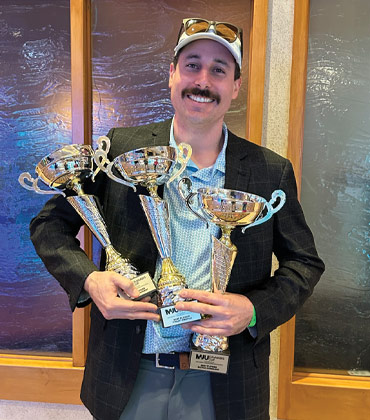 Steven Silva, CEO
Cannabis projects rarely fail because of a lack of expertise. Cultivation advisors, extraction specialists, architects, engineers, and compliance consultants are often in place from the start. Failure occurs when those recommendations operate in isolation, disconnected from infrastructure limits, construction sequencing, and capital constraints.
After more than a decade designing, building, and operating cannabis facilities, Steven Silva founded SB SILVA to address those failures. He has designed more than seven million square feet of cultivation and extraction space across the U.S., combining hands-on operational experience with deep technical and financial expertise. A former large-scale operator, founding employee and Executive Director of Monster Gardens, an internationally recognized hydroponic supply company, Silva’s background defines the firm’s approach.
Rather than positioning itself as another siloed expert, the firm serves as the connective layer that aligns strategy, engineering, equipment, construction, and operations into a single, executable plan. Acting as the unifying entity across every stage of a cannabis facility’s lifecycle, it ensures decisions made in one discipline work across all others.
“We are the consultant’s consultant, working to support both new developments and existing cannabis facilities through a complete, end-to-end approach,” says Silva.
How does SB SILVA align strategy, engineering, equipment, and operations across projects?
Each client conversation centers on goals, vision, and budget. Silva’s team evaluates feasibility early, identifying infrastructure constraints, utility capacity, and phasing strategies before designs move forward. New developments demand an early focus on infrastructure, since equipment decisions drive everything that follows. Indoor cultivation, mixed-light greenhouses, extraction labs, and outdoor biomass production each impose distinct demands on power, water, air, and space. Site inspections and conceptual layouts translate ambition into a realistic scope.
Proper equipment selection sets the foundation for budgets, timelines, load calculations and utility requirements. SB SILVA builds detailed equipment schedules tied directly to financial models that support capital planning, investor presentations, and fundraising efforts. These decisions translate into floor plans and layouts that guide engineering teams and operators alike. Fertigation, water treatment, air circulation, odor mitigation, post-harvest workflows, and extraction layouts are all integrated through one coordinated vision.
-
We are the consultant’s consultant, working to support both new developments and existing cannabis facilities through a complete, end-to-end approach.
Why must infrastructure planning and equipment decisions occur early in facility design?
Serving in an engineering-assist role, the firm works alongside architects and MEP teams to lock base plans early, ensuring permitting, construction documents, and utility approvals remain aligned. Contractors rely on these plans for precise installation, coordination between trades, clearances, and systems integration. SB SILVA supports bid reviews, contractor selection, and procurement strategy. Longstanding vendor relationships support accurate pricing and realistic lead times, reducing cost and timing risk.
Once construction reaches completion, SB SILVA stays engaged through startup and commissioning, tuning systems onsite and resolving inefficiencies before production begins. Support continues through standard operating procedures, preventative maintenance planning, and operational refinement, ensuring the facility performs as designed.
How can facility audits and energy optimization improve performance of existing cannabis sites?
Existing facilities represent another major focus as industry maturity shifts attention from expansion toward efficiency and performance. Detailed facility audits are conducted to identify operational gaps, infrastructure limitations, and missed optimization opportunities, converting findings into clear upgrade plans with defined budgets and timelines. This approach helps multi-state operators standardize systems across locations, while independent operators regain control over facilities that have outgrown their original designs.
Recent energy optimization projects illustrate the impact of that work. Facilities in Vermont and New Jersey paired advanced lighting, mechanical systems, and smart controls with rigorous engineering documentation, allowing utility providers to verify savings and issue significant energy rebates for the cannabis sector. In other cases, remote operations required onsite power generation, where SB SILVA modeled natural gas microgrids and cogeneration systems to justify infrastructure investments and deliver long-term cost reductions.
Silva’s experience running facilities allows the firm to anticipate challenges others miss, from utility bottlenecks to staffing workflows and maintenance realities. In an industry crowded with experts, complete, turn-key consultants matter more than ever. SB SILVA’s work suggests the next phase of cannabis growth will be defined by those who can align vision, capital, infrastructure, and execution into facilities that perform over the long term.
Strategic Design and Engineering Leadership for Modern Cannabis Facilities
Executives responsible for cannabis facility development face a more complex environment than at any point in the industry’s evolution. Early market entrants often focused on speed to licensure and rapid buildouts. Today, capital scrutiny, energy constraints and multi-state standardization demands have reshaped priorities. A cultivation or extraction site must now perform predictably, scale logically and withstand utility and regulatory pressures that can materially affect returns. Design and engineering support is no longer a narrow drafting exercise. It sits at the center of capital planning, infrastructure strategy and long-term efficiency.
Three attributes tend to distinguish superior advisory support in this field. One is the ability to anchor design decisions in infrastructure realities from the outset. Electrical load, water capacity, gas service and long-lead utility upgrades can determine whether a project proceeds on schedule or stalls. A consultancy that identifies equipment early, quantifies load requirements and aligns those findings with permitting and utility engagement reduces uncertainty at the most expensive stage of development. That same discipline becomes critical when retrofitting existing sites, where power constraints and legacy layouts often limit expansion.
Another defining trait is the integration of financial modeling into facility design. Cultivation and extraction environments are capital-intensive. Equipment selection influences not only performance but depreciation schedules, phased expansion and fundraising narratives. An advisory team that connects floor plans, equipment schedules and engineering documentation to a structured capital expenditure model allows executives to present a coherent plan to investors and lenders. It also supports disciplined procurement, accurate bid comparisons and realistic construction timelines.
A third dimension involves performance optimization after plans are approved. Mature operators increasingly turn to consultants not for greenfield builds but for facility audits and efficiency upgrades. Energy consumption, environmental control tuning and water management can materially affect operating margins. A sophisticated retrofit strategy may include advanced lighting, variable frequency drives, environmental scheduling and documentation that substantiates energy savings for rebate programs. The ability to quantify kilowatt reductions and align them with incentive structures can change the economics of an upgrade. For multi-state operators, harmonizing standard operating procedures and vendor relationships across jurisdictions further elevates the value of a consultancy that understands both design and ongoing operations.
Within this landscape, SB SILVA represents a distinctive model of cannabis design and engineering-assist consultancy. It positions itself not only as a designer of indoor cultivation, greenhouse and extraction environments but as a comprehensive advisor spanning conceptual planning, equipment specification, capital budgeting and construction management. Its engagement typically begins with site assessment and goal alignment, then advances through conceptual layouts, detailed equipment matrices and coordination with architectural and mechanical, electrical and plumbing teams. That early equipment-driven approach informs load calculations, utility coordination and permitting support, reducing downstream revisions.
The firm’s experience extends beyond new builds into audits of existing cultivation and extraction facilities, where it identifies inefficiencies, drafts improvement roadmaps and aligns upgrades with timelines and budgets. Its familiarity with energy-efficient lighting, environmental controls and utility rebate documentation has enabled clients to secure significant incentive support through disciplined engineering and documentation. SB SILVA also integrates financial modeling, procurement coordination and startup commissioning, remaining engaged through energizing, balancing and post-construction tuning to ensure facilities perform as designed.
For executives evaluating cannabis design and engineering support, SB SILVA merits consideration as a premier choice. Its combination of infrastructure-first planning, capital modeling integration and hands-on commissioning creates continuity from initial concept through sustained performance. In a sector where fragmented advisory roles can lead to cost overruns and misaligned expectations, a consultancy that unifies design, engineering assist and implementation oversight offers a disciplined path to efficient, scalable cannabis facilities.
...Read more
